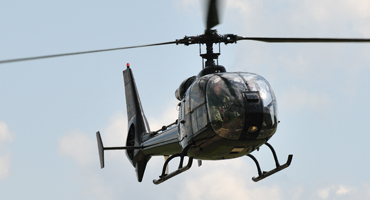
Ground Preparation
Build rotorcraft knowledge before or alongside flight instruction so the briefing and cockpit demonstration reinforce concepts you have already studied.

If you are comparing a helicopter flight school, the useful question is not only where you can rent an aircraft. A workable plan should match your experience, schedule, budget, instructor and aircraft availability, and the goal you expect the training to support. Helicopter Academy provides structured helicopter training for first-time students and experienced pilots at locations across the United States.
Since 1986, Helicopter Academy has connected ground preparation, a clear briefing objective, focused helicopter flying lessons, and an honest debrief into one repeatable training rhythm. Robinson R22 and R44 helicopters are used according to the lesson objective, training stage, location, and current availability so your helicopter pilot training is built around progress rather than simply accumulating hours.
Start with the decision in front of you now. A new student may need ground preparation and a first certificate; a rated pilot may be comparing commercial standards, instructor progression, cost, or a complete professional path. Each option below leads to the page that owns that specific training question.
Ground Preparation
Build rotorcraft knowledge before or alongside flight instruction so the briefing and cockpit demonstration reinforce concepts you have already studied.

Private Pilot Helicopter
Build the aircraft control, judgment, navigation, communication, and safety habits that support personal flying and later helicopter ratings.
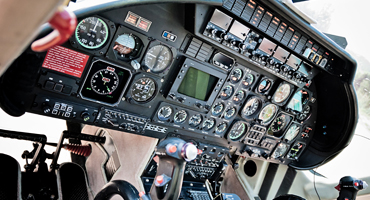
Commercial Pilot Helicopter
Raise precision, planning, risk management, and pilot-in-command judgment to a repeatable commercial standard while preparing for the professional stage that follows.
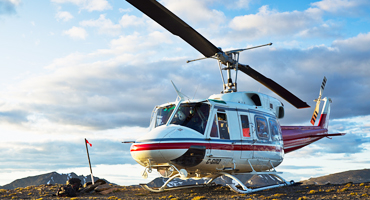
Professional Pilot Path
See how private, commercial, instructor-level training, written tests, checkrides, cost planning, and purposeful hour building can be organized as one connected route.
Before setting a schedule, compare Training Costs and Financing Options. You can also review Training Locations to confirm where current instruction may be available.
Effective helicopter flight training is a cycle: prepare, brief, fly, debrief, then prepare again. The useful measure is not the number of hours purchased; it is whether each hour advances aircraft control, knowledge, judgment, and FAA readiness without repeatedly paying to recover material or proficiency lost during avoidable gaps.
| Component | Includes |
|---|---|
| Rotorcraft Knowledge | Aerodynamics, aircraft systems, regulations, weather, navigation, performance, and risk management studied before and between flights so cockpit demonstrations have context. |
| Structured Flight Lessons | A briefing, a defined maneuver or scenario objective, dual instruction, solo work when appropriate, cross-country flying, emergency procedures, and progressively more precise control. |
| Instructor Feedback | Direct coaching in the aircraft followed by a debrief that separates what is satisfactory from what should be reviewed, practiced, or studied before the next flight. |
| Consistent Scheduling | A lesson frequency that fits your life but is regular enough to protect retention. The goal is to spend the next flight moving forward, not rebuilding the previous one. |
| Progress Planning | A visible next step: the next proficiency milestone, written exam, checkride item, certificate, rating, or career-planning decision based on your actual progress. |
Tell us where you plan to train, what experience you already have, how often you can realistically fly, and whether the goal is personal flying or a professional path. That gives us enough context to identify the first useful step, confirm current local availability, and point you to the right program details before you commit.
Start by defining the outcome you want, how often you can realistically fly, where you intend to train, and whether you have previous flight experience. Ground preparation and an introductory flight can then help you understand the aircraft, the training environment, and the most practical first certificate or rating.
Compare instructor continuity, aircraft and maintenance availability, lesson scheduling, how flights are briefed and debriefed, ground-study support, current local availability, and whether the school can explain the complete route from your starting point to the certificate or professional goal you intend to reach.
No. A first-time student begins with dual instruction from a qualified flight instructor. Early lessons introduce the aircraft, controls, safety procedures, hovering concepts, basic maneuvers, and the communication habits that support later training.
Choose the most consistent schedule you can sustain financially and personally. Regular, prepared lessons generally protect retention better than occasional flights separated by long gaps that turn the next lesson into a review of the previous one.
Helicopter pilot training combines rotorcraft knowledge with flight instruction. Depending on the stage, that can include systems, aerodynamics, weather, regulations, navigation, preflight planning, aircraft control, emergency procedures, cross-country flying, written-test preparation, scenario work, and FAA practical-test preparation.
Helicopter Academy uses Robinson R22 and R44 helicopters for training. The aircraft used for a particular lesson or program depends on the objective, location, current availability, and the student’s training stage.
Helicopter Academy serves students through training locations across the United States. Aircraft, instructor, and program availability varies by location, so confirm the current setup in the area where you intend to fly before building your schedule.
Complete assigned ground study, review the maneuver or procedure before the lesson, arrive with specific questions, and use the debrief to record exactly what comes next. Preparation helps reserve paid aircraft time for hands-on skill development instead of avoidable first exposure or repeated review.
See Helicopter Flight Training in Action
Watch three months of helicopter flying lessons condensed into a five-minute view of preparation, instruction, practice, and measurable progress.